Panel
Network Models for AI in the 6G Era
Christophe Diot
UMass Amherst, USA
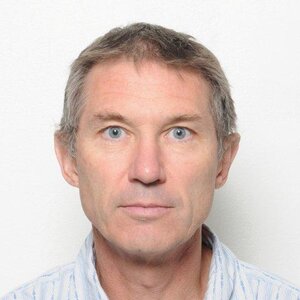 About the panelist: Christophe Diot received a Ph.D.
degree in Computer Science from INP Grenoble in 1991. Throughout his 35
years career, Diot pioneered diffserv, single source multicast, ad-hoc
communication, peer-to-peer online games, unsupervised anomaly detection
and most importantly Internet measurements. After five years in public
research at INRIA, Diot spent his career in industry, building R&D labs
at Sprint (Bay area), INTEL Research (Cambridge, UK), and Technicolor
(Paris and Palo Alto). He was the Chief Scientist at Technicolor between
2009 and 2015. He helped launch Safran Analytics as their CTO before
joining Google in June 2018 as a Principal Engineer. Diot designed
telemetry solutions for improving Google’s network and cloud
availability. At Google, he was also the corporate sponsor for M-Lab. He
joined UMass Amherst as a research fellow in 2026 to do research on
cellular networking and internet architecture. Diot has around 30 patents
and more than 200 publications in major conferences and journals, with an
H index of 84. He is an ACM Fellow.
About the panelist: Christophe Diot received a Ph.D.
degree in Computer Science from INP Grenoble in 1991. Throughout his 35
years career, Diot pioneered diffserv, single source multicast, ad-hoc
communication, peer-to-peer online games, unsupervised anomaly detection
and most importantly Internet measurements. After five years in public
research at INRIA, Diot spent his career in industry, building R&D labs
at Sprint (Bay area), INTEL Research (Cambridge, UK), and Technicolor
(Paris and Palo Alto). He was the Chief Scientist at Technicolor between
2009 and 2015. He helped launch Safran Analytics as their CTO before
joining Google in June 2018 as a Principal Engineer. Diot designed
telemetry solutions for improving Google’s network and cloud
availability. At Google, he was also the corporate sponsor for M-Lab. He
joined UMass Amherst as a research fellow in 2026 to do research on
cellular networking and internet architecture. Diot has around 30 patents
and more than 200 publications in major conferences and journals, with an
H index of 84. He is an ACM Fellow.
Jim Kurose
UMass Amherst, USA
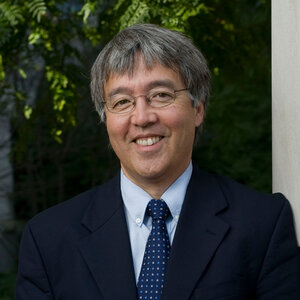 About the panelist: Jim Kurose is a Distinguished
University Professor Emeritus at the University of Massachusetts Amherst.
In 2023-2026 he is also an invited researcher at the Sorbonne University
in Paris, France. He has held a number of visiting scientist positions in
the US and abroad, including the Sorbonne University, the University of
Paris, INRIA, Technicolor, and IBM Research. Jim has also served for five
years as Assistant Director at the US National Science Foundation, where
he led the Directorate of Computer and Information Science and
Engineering (CISE), and in 2018 also served as the Assistant Director for
Artificial Intelligence in the White House Office of Science and
Technology Policy (OSTP).
About the panelist: Jim Kurose is a Distinguished
University Professor Emeritus at the University of Massachusetts Amherst.
In 2023-2026 he is also an invited researcher at the Sorbonne University
in Paris, France. He has held a number of visiting scientist positions in
the US and abroad, including the Sorbonne University, the University of
Paris, INRIA, Technicolor, and IBM Research. Jim has also served for five
years as Assistant Director at the US National Science Foundation, where
he led the Directorate of Computer and Information Science and
Engineering (CISE), and in 2018 also served as the Assistant Director for
Artificial Intelligence in the White House Office of Science and
Technology Policy (OSTP).His research interests include computer network architecture and protocols, network measurement, and multimedia communication. He is proud to have mentored and taught an amazing group of students, and to have received a number of awards for his research, teaching and service, including the IEEE Infocom Award, the ACM SIGCOMM Lifetime Achievement Award, the ACM SIGCOMM Test of Time Award, and the IEEE Computer Society Taylor Booth Education Medal. With Keith Ross, he is the co-author of the best-selling textbook, Computer Networking: a Top Down Approach (Pearson), now in its 9th edition. He is also the author of a new open-access book, Wireless and Mobile Networks. He is a member of the National Academy of Engineering and a Fellow of the ACM and the IEEE.
Serge Fdida
Sorbonne Université, France
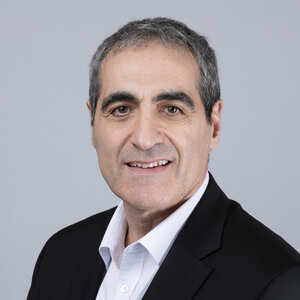 About the panelist: Serge Fdida is a Professor with
Sorbonne Université, Paris, France. His research interests are related
to the future networked systems, technology and architecture (internet,
6G, …). He has been coordinating 11 research projects in Europe,
notably pioneering the activity on federated Internet testbeds (he
established PlanetLab Europe in 2007). Serge Fdida is a member of the
French Academy of Engineering, an IEEE Fellow and an ACM SIGCOMM
Distinguished Scientist. Serge Fdida also developed a strong experience
related to innovation and industry transfer: co-founder of the Qosmos and
Hopcast companies, leadership role to the creation of the Cap Digital
cluster in Paris, President of EIT Health France and coordinator of the
4EU+ European University. He steered the successful SLICES initiative, the
first large-scale scientific instrument in Digital Sciences, that entered
the ESFRI roadmap in 2021. He also developed a strong experience in the
governance of Higher research and education organizations: Adviser ITC
Department CNRS (2000-2005); Vice-President European affairs University
P&M Curie (2014-2018); Vice-President International Development of
Sorbonne Université (2018-2021).
About the panelist: Serge Fdida is a Professor with
Sorbonne Université, Paris, France. His research interests are related
to the future networked systems, technology and architecture (internet,
6G, …). He has been coordinating 11 research projects in Europe,
notably pioneering the activity on federated Internet testbeds (he
established PlanetLab Europe in 2007). Serge Fdida is a member of the
French Academy of Engineering, an IEEE Fellow and an ACM SIGCOMM
Distinguished Scientist. Serge Fdida also developed a strong experience
related to innovation and industry transfer: co-founder of the Qosmos and
Hopcast companies, leadership role to the creation of the Cap Digital
cluster in Paris, President of EIT Health France and coordinator of the
4EU+ European University. He steered the successful SLICES initiative, the
first large-scale scientific instrument in Digital Sciences, that entered
the ESFRI roadmap in 2021. He also developed a strong experience in the
governance of Higher research and education organizations: Adviser ITC
Department CNRS (2000-2005); Vice-President European affairs University
P&M Curie (2014-2018); Vice-President International Development of
Sorbonne Université (2018-2021).
Abhimanyu Gosain
Northeastern University, USA
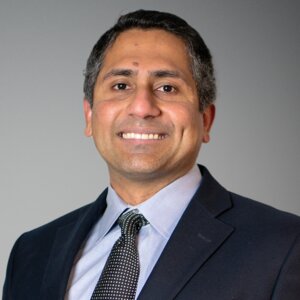 About the panelist: Abhimanyu Gosain is a Senior
Director for Institute for Intelligent Networked Systems at Northeastern
University, co-Chair for the US FCC 6G Technology Advisory Council, World
Radio Conference Advisory Committee (WAC) member, and Senior Advisor for
NTIA Innovation Fund and US Department of Defense Research and
Engineering FutureG. He is the Co-PI for NSF NRDZ EEL program, POSE
Open6G and Colosseum program. He is a Founding member for Magma Core
Foundation and University representative for O-RAN Alliance, AI-RAN
Alliance and NextG Alliance. He serves on multiple International project
committees of Japan XGMF, SLICES-EU and co-chair on organizing committees
for OpenRIT6G, 6GSymposium, EuCNC, IEEE InfoCom, GlobeCom and ACM WinTech.
He is a US government 3GPP delegate and IEEE Senior Member. His numerous
professional publications and experience exemplify use-inspired basic
research in the field of networking technologies, such as 5G, 6G, AI/ML,
edge computing, and IoTs.
About the panelist: Abhimanyu Gosain is a Senior
Director for Institute for Intelligent Networked Systems at Northeastern
University, co-Chair for the US FCC 6G Technology Advisory Council, World
Radio Conference Advisory Committee (WAC) member, and Senior Advisor for
NTIA Innovation Fund and US Department of Defense Research and
Engineering FutureG. He is the Co-PI for NSF NRDZ EEL program, POSE
Open6G and Colosseum program. He is a Founding member for Magma Core
Foundation and University representative for O-RAN Alliance, AI-RAN
Alliance and NextG Alliance. He serves on multiple International project
committees of Japan XGMF, SLICES-EU and co-chair on organizing committees
for OpenRIT6G, 6GSymposium, EuCNC, IEEE InfoCom, GlobeCom and ACM WinTech.
He is a US government 3GPP delegate and IEEE Senior Member. His numerous
professional publications and experience exemplify use-inspired basic
research in the field of networking technologies, such as 5G, 6G, AI/ML,
edge computing, and IoTs.